 1-800-413-2579
Posted by Metro Screenworks on Oct 5th 2026
How to Remove Window Screens Without Damaging the Frame
How to Remove Window Screens Without Damaging the Frame
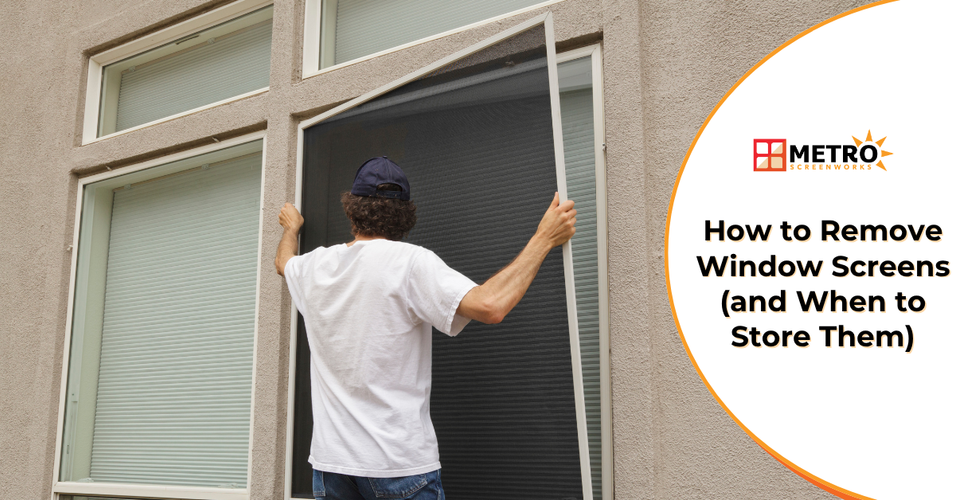
If you are learning how to remove window screens, start by finding the pull tabs, finger holds, clips, or track that secures the screen. Release the frame gently, angle it toward the opening, and lift it free without forcing it. Screen frames bend more easily than they look.
Homeowners remove screens for several reasons, including seasonal storage, cleaning, and washing the window behind them. This guide explains how removal changes by window type, whether screens should come out for winter, how to store them, and when an old screen is better replaced with a new replacement window screen.
Before You Start: What to Check
Before removing anything, look closely at how the screen is mounted.
Some window screens sit in tracks. Others use pull tabs, clips, plungers, or tension. Casement and awning windows often secure the screen from inside, while sliding windows may use an exterior track.
Whenever possible, work from inside the house rather than using a ladder outside.
For second-story or otherwise difficult-to-reach screens, leave the job to someone who has the proper access equipment rather than leaning out of an upper window.
You should also decide where each screen will go before you remove it. Screens can bend if they are dropped, stepped on, or left leaning awkwardly against a wall.
One simple step makes spring installation much easier: label every screen as it comes out.
Use removable painter's tape or another non-damaging label to mark the room and window, such as "Living Room Left" or "Bedroom 2 East."
Do not assume two screens that appear identical are interchangeable. Small differences between openings can be enough to make the wrong screen difficult to reinstall.
This is also a good time to inspect the frame and mesh. If you notice a tear, loose spline, sagging mesh, or a bent corner while the screen is already in your hands, you can deal with it before it goes back into storage.
How to Take Out Window Screens by Window Type
Learning how to take out window screens is easier once you identify the window type.
The screen itself is not always the deciding factor. Two screens can look nearly identical but come out in completely different ways because the windows holding them are constructed differently.
That is why forcing a screen is rarely a good strategy. If the frame does not release with light pressure, stop and look for another clip, tab, channel, or track.
Double Hung Windows
Double hung windows are one of the most common situations for window screen removal.
Start from inside the house. Open the lower sash far enough to reach the bottom of the screen comfortably.
Look for pull tabs, finger lifts, or small tabs along the lower edge of the screen frame. These are intended to help move the screen without pulling directly on the mesh.
On many double hung windows, the screen sits in a track and must move slightly upward before the bottom edge can be released.
Hold the frame rather than the screen material. Apply gentle pressure in the direction the track allows, lift or compress the frame enough to free the opposite edge, and then angle the screen into the opening.
Once the lower edge clears the track, turn the screen slightly and bring it through the window.
If it feels stuck, check both corners before applying more force. Paint buildup, debris, bent frame material, or a hidden retaining mechanism can make one side behave differently from the other.
The goal is controlled movement, not leverage.
Casement and Awning Windows
Casement and awning windows usually have screens mounted on the interior side of the window.
Instead of sitting under the same kind of tension as many double hung screens, these screens often use clips, latches, pins, or other retaining hardware around the frame.
Open or unlock the retainers one at a time while supporting the screen with your other hand.
Once they are released, the screen should pull inward.
Be especially careful around the crank hardware on casement and awning windows. If the screen needs to be tilted to clear the opening, watch the bottom edge so it does not catch on the crank mechanism or handle.
Do not pull on the mesh itself. Always use the rigid frame.
Sliding Windows
Sliding window screens commonly move in an exterior track.
To remove one, slide the window open and inspect the top and bottom edges of the screen frame. Many are designed to lift upward into the top track just far enough for the bottom edge to clear the lower track.
Once the lower edge is free, tilt it toward you and lower the screen out.
Because many sliding window screens are removed from the exterior side, access is the main concern.
If the screen cannot be reached safely from ground level, do not improvise from an unstable ladder or through an awkward window opening. Safe access matters more than getting the screen out that day.
Screens Without Tabs
Removing window screens becomes more confusing when there are no visible pull tabs.
First, inspect the entire frame. Some screens use spring-loaded plungers, clips, or concealed finger holds instead of obvious fabric or plastic tabs.
If there is no built-in grip, a thin putty knife or flat plastic pry tool can sometimes help create enough space to get your fingers around the frame.
Work carefully and use only enough pressure to release the screen. A screwdriver is a poor substitute because its narrow metal edge can gouge vinyl, scratch finished surfaces, or bend the screen frame.
Suction cups may also provide a temporary grip on some screens when there is no convenient place to hold the frame.
For repeated maintenance or difficult screens, a dedicated screen removal tool can make the job easier without putting unnecessary pressure on the frame.
If a screen appears firmly locked in place, stop before prying harder. Look for another retaining clip or fastener first.
Should You Remove Window Screens in the Winter?
In many homes, yes, it makes sense to remove seasonal window screens for winter.
If you do not expect to open the window again until spring, the screen is not serving much purpose during the cold months. Taking it out keeps the mesh and frame out of winter weather and gives you a chance to inspect the screen before storing it.
Removing screens also gives you a clearer view through the glass and allows more unobstructed daylight through the window.
Winter storage is particularly useful in climates where screens spend months exposed to snow, ice, wind, and other weather even though the windows remain closed.
However, there is no rule that every window screen must come out.
If you regularly open certain windows on mild winter days, leaving those screens installed can be convenient.
The same applies to screens that are difficult or unsafe to reach. A perfectly usable screen does not need to become a ladder project just because winter has arrived.
Screens can remain installed through winter. The tradeoff is simply that continued exposure adds wear when the screen is not being used.
So if you are wondering, should you take screens out of windows for winter? The practical answer is usually yes when they are easy to remove and the windows will stay closed, but leaving them in is reasonable when access or winter ventilation makes removal inconvenient.
If cold drafts or window sealing are your main concern instead, that is a separate issue from the screen itself. Use Metro's guide to winterizing your windows for the sealing and draft side of winter preparation.
How to Store Window Screens
Good window screen storage is mostly about keeping the frames clean, dry, and straight.
Before storage, screens should be clean and completely dry. Moisture and debris left against the mesh for months can create unnecessary wear.
For detailed cleaning instructions, follow Metro's guide on how to clean window screens rather than scrubbing them randomly before putting them away.
Once dry, keep the labels you added during removal attached to the frames.
Screens can be stored flat in a protected stack or vertically on edge as long as they are fully supported.
What you want to avoid is leaving a screen leaning diagonally against a wall with its weight resting on one corner. Over time, that position can encourage a lightweight frame to bow or twist.
Do not stack heavy boxes, tools, or seasonal decorations on top of horizontal screens either.
Choose a dry location away from direct sun and standing moisture.
A garage wall rack can work well. So can a clean, protected gap between wall studs or another dedicated vertical storage area.
A damp basement floor is a poor choice, especially if the lower edge of the frame or mesh can remain in contact with moisture.
The best way to store window screens is not complicated: dry, supported, labeled, and somewhere they will not get crushed.
How to Tell When a Screen Should Be Replaced Instead
Removing a screen gives you the best possible opportunity to evaluate its condition.
Look over both the frame and the mesh before putting it away.
Common signs that a screen needs attention include:
- Tears or holes in the mesh
- Mesh that has become loose or bowed
- Spline pulling out of the frame channel
- Hardened or damaged spline
- Separated frame corners
- A frame that is bent or visibly bowed
- Mesh that has become brittle, chalky, or damaged from exposure
Not every damaged screen needs to be replaced completely.
If the frame is square and structurally sound, worn mesh and spline can often be replaced. Metro carries screen mesh rolls as well as screen spline and window screen frame for repair projects.
If the frame itself is badly bent, twisted, or separating at the corners, replacing the complete screen is usually the more practical path.
Homeowners also frequently ask how long do window screens last.
Condition is a better guide than age. A screen protected by an overhang in a mild climate may wear very differently from one exposed to intense sun, storms, pets, or frequent removal.
Inspect what is actually in front of you rather than replacing an otherwise good screen simply because it has reached a certain age.
If a screen needs replacing, the off season can be a convenient time to order a complete replacement window screen so it is ready before you want to open the windows again in spring.
Putting Screens Back in the Spring
Reinstalling screens is generally the reverse of the removal process.
Your labels become especially helpful here. Match each screen to its original opening before trying to install it.
Position the frame in the appropriate track or opening, compress or lift it in the same direction used during removal, and guide the opposite edge back into place.
Once installed, check that the screen sits square and does not bow away from the frame.
If a screen suddenly does not fit the opening it came from, do not force it. Recheck the label and inspect the frame for bending.
If you need to replace it, follow Metro's guide on how to measure for window screens before ordering.
For openings where a standard fitted screen is not practical, adjustable window screens may also provide another option.
Frequently Asked Questions
How do you remove a window screen from the inside?
Open the window and locate the screen's pull tabs, finger holds, clips, or retaining track. Hold the rigid frame, release the tension or clips, then angle the screen into the opening and bring it inside. Avoid pulling directly on the mesh.
Should you remove window screens in the winter?
Usually, yes, if the windows will remain closed and the screens are easy to access. Removing them reduces unnecessary weather exposure and makes inspection and storage easier. Leaving screens installed is also reasonable if you open the windows during winter or removal would be unsafe.
How do you remove a window screen without tabs?
Inspect the frame for clips, plungers, or concealed finger holds first. If none are present, a thin putty knife, flat plastic pry tool, suction cup, or dedicated screen removal tool may help create a grip. Avoid screwdrivers because they can damage the frame or window finish.
Can you remove window screens from the inside on every window?
No. Many double hung, casement, and awning window screens can be removed from inside, but some sliding window screens come out through an exterior track. Always inspect the window design before forcing a screen toward the interior.
How should window screens be stored over winter?
Store screens completely dry, labeled, and protected from bending. They can lie flat in a safe stack or stand vertically with proper support. Keep them away from direct sun, standing moisture, and heavy items that could crush or distort the frames.
Do window screens need to be cleaned before storage?
Cleaning before storage is a good practice because it removes dirt and debris that would otherwise sit on the mesh for months. Allow the screens to dry completely before stacking or storing them.
How do you know when a window screen needs replacing?
Inspect the mesh, spline, corners, and frame. Small mesh or spline problems may be repairable if the frame is still square and sound. A badly bowed frame, separated corner, brittle mesh, or widespread damage may make complete replacement the better option.
Why do people take window screens out in winter?
Winter removal protects screens from unnecessary seasonal exposure, provides a clearer view through the glass, and creates a convenient opportunity to inspect, clean, repair, and store them until the windows are opened again.
Remove, Label, Inspect, and Store
Window screen removal does not require much equipment, but technique matters.
Identify how each screen is secured, remove it without forcing the frame, label it to the correct window, clean and inspect it, then store it somewhere dry and supported until you need it again.
If you discover damage while the screen is out, decide whether the mesh can be repaired or whether the frame itself needs replacing.
Metro Screenworks offers replacement window screens made to your measurements. For larger or unusual projects, you can also request a quote.