 1-800-413-2579
Wood, Brick, Stone, Tile & Concrete Surfaces
Simple Steps for a Clean, Professional Screen Porch
Installing SNAPP® Screen Track on your porch, patio, or deck floor is straightforward—and adaptable to nearly any surface. Whether you're working with wood, composite decking, concrete, or masonry materials like brick and stone, the process is simple with just a few key considerations based on your flooring type.
Understanding Porch Flooring Types
Most raised residential porches are built using wood or composite decking, thanks to affordability, ease of installation, and versatility. For ground-level porches, concrete remains the most common choice due to its durability and longevity.
In recent years, design trends have shifted toward enhancing concrete with:
- Tile, brick, or natural stone overlays
- Stamped concrete finishes that mimic high-end materials
- Concrete pavers used in freestanding patio or gazebo-style builds
The good news: SNAPP® Screen Track can be installed on all of these surfaces—with slight variations in approach.
Wood or Composite Flooring Installation
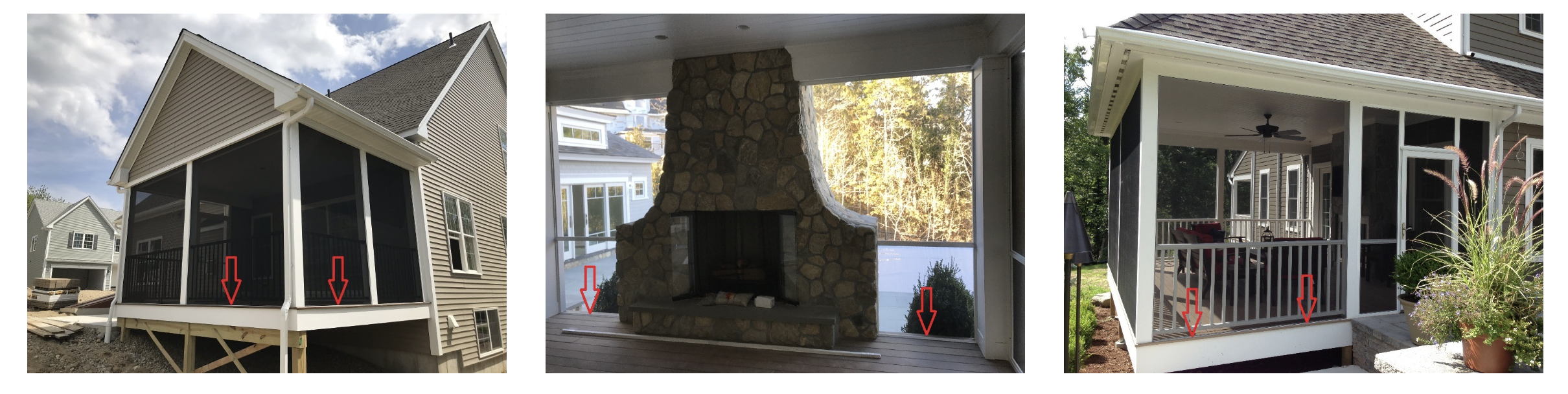
Direct Installation (Most Common)
For wood or composite decks, the simplest method is direct installation:
- Attach the SNAPP® base track directly to the flooring
- Use standard screws appropriate for wood or composite materials
- Space fasteners approximately every 12 inches
This is the most widely used method for base track installation due to its simplicity and clean finish.
Installation with a Starter Strip
Another common option is installing a starter strip (or spacer) first, then mounting the SNAPP® track on top.
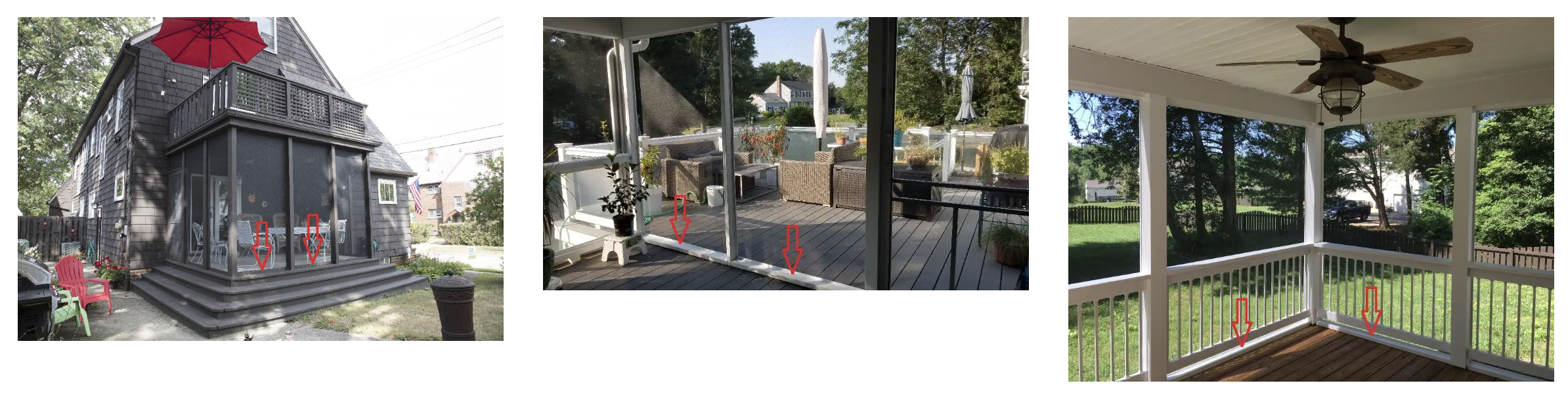 Why use a starter strip?
- Raises the screen slightly off the floor
- Creates additional working space during installation
- Improves aesthetics in some builds
Important: This method is optional for wood/composite floors and is based on installer preference—not a requirement.
What is a Starter Strip?
A starter strip (or spacer) is typically made from wood or PVC and is used to create separation between the SNAPP® track and the mounting surface.
Key benefits:
- Allows use of standard (hidden) fasteners
- Helps accommodate uneven surfaces
- Improves installation flexibility
- Essential for masonry applications (see below)
Brick, Stone, Tile & Concrete Floors
For masonry surfaces, using a starter strip is strongly recommended.
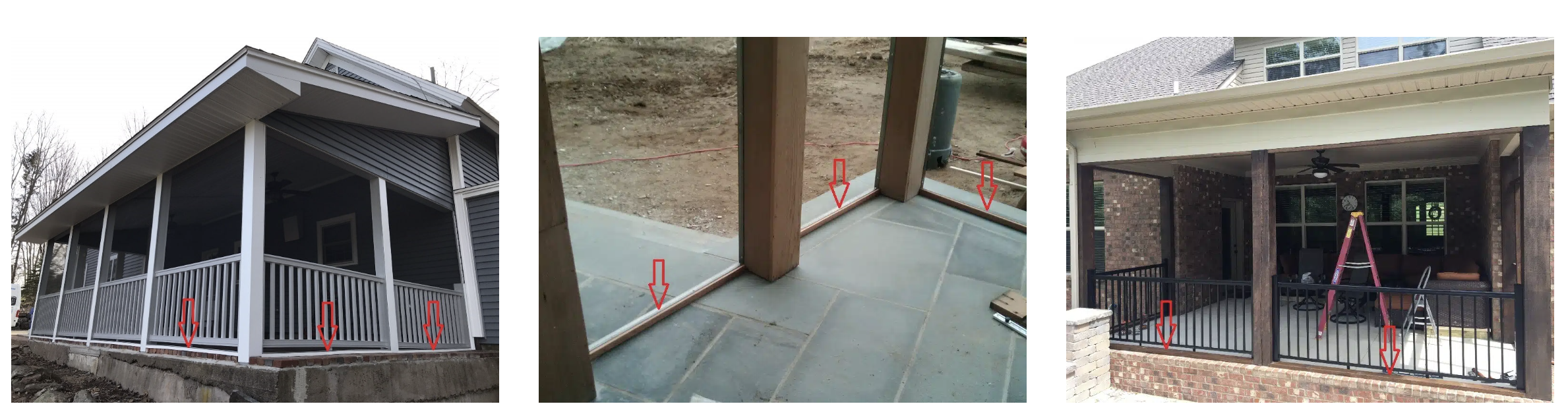
Why this method works best:
- Reduces the number of masonry anchors required
- Allows anchors to be hidden beneath the track
- Creates a smoother, more consistent mounting surface
- Avoids drilling into hard materials every 12 inches
Even when working with smooth concrete or tile, a starter strip is typically the better option for both performance and appearance.
Installation Tips:
- Secure the starter strip using masonry anchors or Tapcon screws
- Mount the SNAPP® track directly to the starter strip
- For uneven surfaces, allow small gaps for water drainage
- Fill larger gaps with soft roll foam only
- Do not use spray foam or caulk
Concrete Paver Floors
Concrete pavers and stamped concrete patios are increasingly popular—but they require a different approach.
Important:
Pavers cannot be anchored into directly, as they may shift over time.
Recommended Installation Method:
- Install a starter strip resting on the paver surface
- Secure the strip to vertical support posts, not the floor
Sizing Guidelines:
- Posts spaced 36"–48": use a standard 2x4
- Openings larger than 48": use larger dimensional lumber
- Best practice:
- Keep openings 60" or less
- Use a 4x4 base strip for added stability
Standard Installation Notes (All Applications)
Water Drainage (Weep Space)
- Use neoprene or plastic washers (~1/8")
- Place 2–3 washers between the floor and track (or starter strip)
- This creates a small gap for water to drain
- Washers do not need to be fastened in place
Aluminum Protection (Bond Break)
- Powder-coated aluminum can be mounted directly to:
- Concrete
- Pressure-treated wood
- For added protection:
- Apply a bond breaker (like electrical tape)
- Run tape along the back of the aluminum track
- This prevents material-to-material bonding and extends product life
Final Thoughts
No matter your porch flooring type, SNAPP® Screen Track offers a versatile, professional-grade solution for building a screened-in space. By choosing the right installation method for your surface, you’ll ensure a cleaner finish, better performance, and long-lasting results.