1-800-413-2579
Easily Screen Your Gazebo Using SNAPP Screen Track
Gazebos create a perfect balance between comfort, style, and outdoor living. While decks and patios remain popular backyard additions, a gazebo offers a unique way to expand your living space while creating a focal point for relaxation and entertaining. From cozy garden retreats designed for two to expansive gathering spaces with outdoor kitchens, gazebos come in a wide range of styles, shapes, and sizes. Traditional designs often feature hexagonal or octagonal layouts, but modern structures now include square, rectangular, decagonal, and custom configurations to fit virtually any space.
No matter the size or design, gazebos add beauty and function to decks, patios, and backyards. The only downside? Warm weather and evening gatherings often invite mosquitoes and other unwanted pests. Instead of letting insects take over your outdoor retreat, transform your gazebo into a comfortable screened-in space with SNAPP® Screen Track. Easy to install and DIY-friendly, it’s a simple way to enjoy fresh air while keeping bugs out.
How To Screen a Gazebo with SNAPP® Screen Track
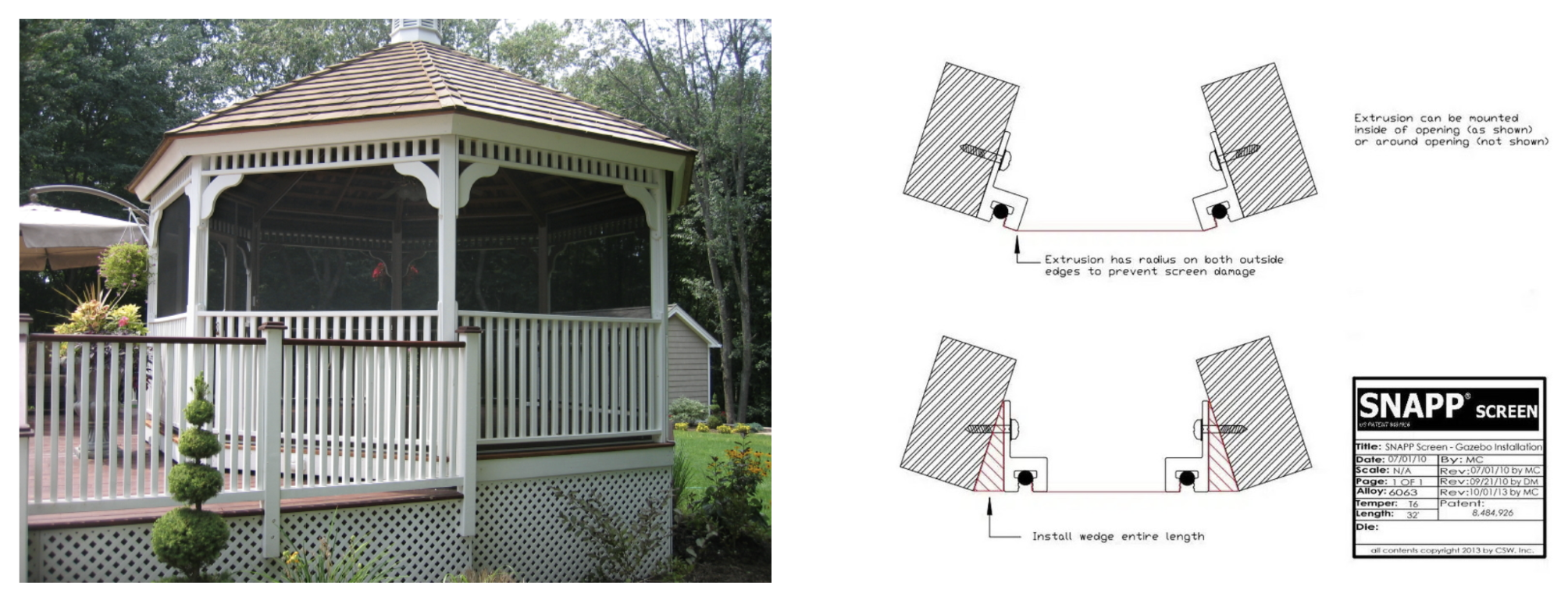
Step 1: Understand the Challenges of Gazebo Screening
Gazebo roof support columns are often built with unique angles and layouts, making them difficult to screen using traditional systems. Unlike standard porch openings, gazebos frequently feature sloped roof lines and angled supports that can create installation challenges.
SNAPP® Screen Track was specifically designed to overcome these obstacles, making it an ideal DIY solution for screening gazebos of virtually any shape or size.
Step 2: Use a System Designed for Odd Angles
The SNAPP® Screen Track retention system is engineered to accommodate angled framing and non-traditional openings. Its unique design includes a rounded radius edge that allows screen mesh to glide smoothly over the extrusion during installation, helping prevent tears and screen damage.
For some projects, you may choose to install angled “wedges” during construction to create a flatter mounting surface. However, in many gazebo applications, SNAPP® Screen Track can be mounted directly to the structure as designed.
Step 3: Choose Your Door Location First
Before screening the entire structure, determine which opening will be used for your screen door entry. Once you’ve selected the doorway location, frame the opening as needed and install the door system.
Planning this first will ensure the remaining screened sections flow naturally around the structure.
Step 4: Follow Standard Installation Steps
After your door opening is complete, continue with the remaining sections using the standard SNAPP® Screen Track installation process.
Because every gazebo design is different, installation layouts may vary slightly depending on your framing and support structure.
Step 5: Adapt the Installation to Your Gazebo Design
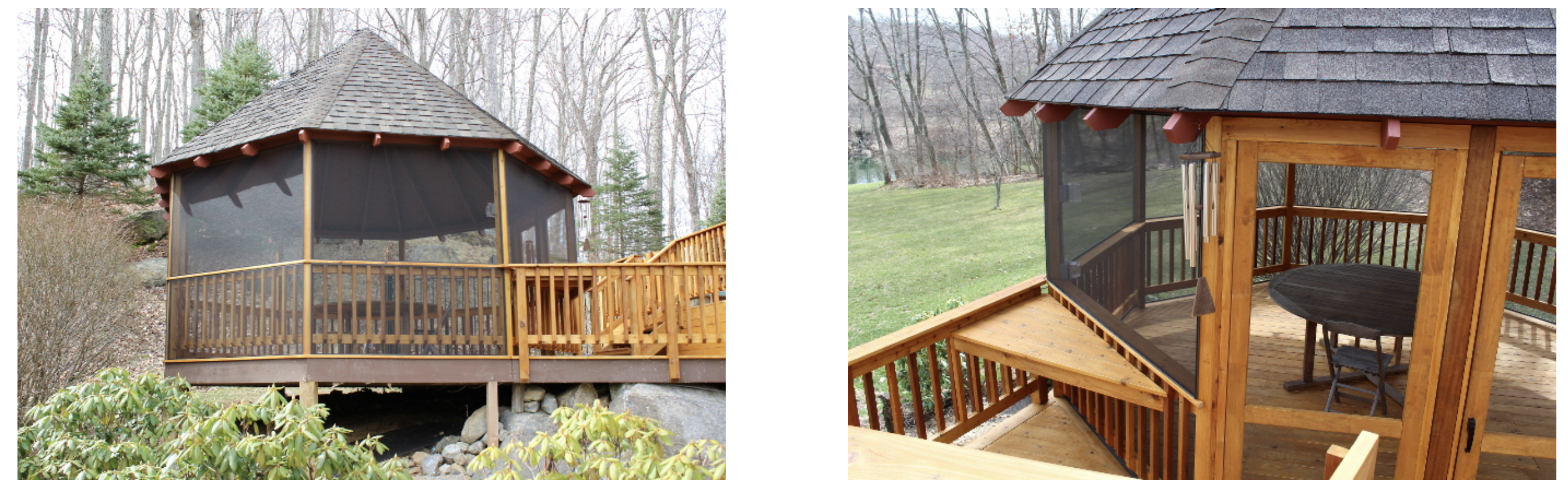
One of the biggest advantages of SNAPP® Screen Track is its flexibility. In the example project shown below, the upper sections and vertical supports were mounted around the openings without wedges, while the bottom track was installed inside the opening.
This adaptability allows homeowners to screen in nearly any gazebo design and create a comfortable, bug-free outdoor living space.